
What's in this deep dive
- What a DRIP, or dividend reinvestment plan, actually is
- How a DRIP compounds
- Weighing whether dividend reinvestment is worth it
- Should you reinvest dividends or take the cash?
- Taxes on reinvested dividends
- DRIP in a taxable versus a tax-advantaged account
- Brokerage DRIP versus company DRIP
- Fractional shares and no-fee reinvestment
- The dollar-cost-averaging effect of a DRIP
- Reinvested versus not: the long-run picture
- The downsides of automatic reinvestment
- When to stop reinvesting dividends
- How to turn a DRIP on
- Automatic versus manual dividend reinvestment
- A worked example: reinvested versus cash over 20 years
- Where DRIP growth actually comes from
- The record-keeping and cost-basis catch
- Reinvesting through a market downturn
- The bottom line
Dividend reinvestment, run automatically through a DRIP, is usually worth it while you are still building wealth: each payout buys more shares that pay their own dividends, so the income base compounds instead of sitting idle. It is worth less, and can even work against you, once a portfolio’s job is to pay you cash you actually spend.
That one decision, reinvest or take the cash, quietly shapes decades of results, and this deep dive works it from the ground up: what a DRIP actually is, how it compounds, whether reinvestment is worth it for you, the tax catch that surprises people in taxable accounts, brokerage versus company plans, fractional shares, the long-run reinvested-versus-cash picture, the downsides worth naming, and when to switch it off. It sits alongside our dividend yield deep dive on the mechanics, our living-off-dividends deep dive on the income phase, and our dividend tax deep dive on what the tax collector keeps. Run your own version in our calculator as you read. Every figure below is illustrative arithmetic, not advice.
Key takeaways
- A DRIP, or dividend reinvestment plan, automatically uses each cash dividend to buy more shares, including fractional shares, at no commission with most modern brokers.
- Reinvestment compounds because the new shares pay their own dividends, which buy more shares: a portfolio yielding an illustrative 4 percent grows its share count by roughly 4 percent a year from dividends alone, before any price growth.
- Reinvesting is usually worth it during the building years and less so once you need the income; the further you are from spending the money, the stronger the case.
- In a taxable account, reinvested dividends are still taxed the year they are paid, even though you never touch the cash. Inside a Roth or other tax-advantaged account, that annual drag disappears.
- The downsides are concentration, cash-flow, and record-keeping, all of which argue for reinvesting on purpose rather than leaving it on autopilot forever.
What a DRIP, or dividend reinvestment plan, actually is
A DRIP, short for dividend reinvestment plan, is a standing instruction that takes each cash dividend and immediately buys more of the investment that paid it, instead of leaving the money sitting in your account. It is a toggle, not a product: you switch it on, and from then on the reinvestment happens on its own, every time a payout arrives, without a single click from you.
The mechanics are simple. On the dividend payment date, the cash that would have landed in your account is instead used to purchase additional shares at that day’s price. Most modern brokers do this for free and in fractional shares, so a $37 dividend buys exactly $37 of new stock rather than waiting until it accumulates enough for a whole share. Nothing is left over, and nothing sits idle.
The result is that your position grows a little on every payment date, quietly and automatically. A holding paying quarterly dividends adds shares four times a year; a fund paying monthly adds them twelve times. You never place the trades, never decide the timing, and never let the cash drift. That hands-off quality is the entire appeal, and it is what turns a stream of small payouts into a compounding machine, the subject of the next section.
How a DRIP compounds
The reason a DRIP is more than a convenience is compounding, and the loop is worth stating plainly: reinvested dividends buy shares, those shares pay their own dividends, and those dividends buy still more shares. Each turn of the loop enlarges the base that feeds the next one, which is the same engine our dividend yield deep dive puts at the center of any long-run plan.
Put a number on the first turn. A portfolio yielding an illustrative 4 percent, with every payout reinvested, grows its share count by roughly 4 percent a year from dividends alone, before the price moves a cent or the company raises its payout. That extra 4 percent of shares then pays its own 4 percent, so next year’s dividend is larger than a simple 4 percent of your original stake. The growth is small in year one and relentless over decades.
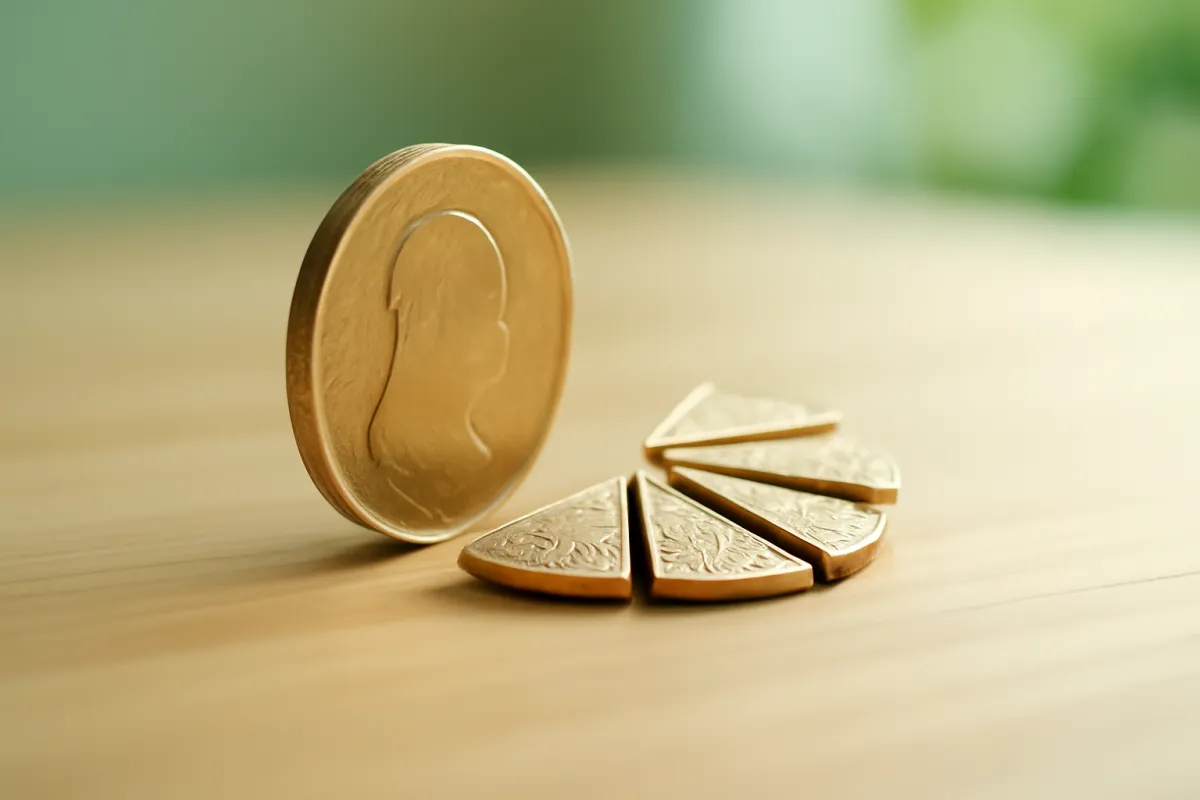
Layer in two more forces and the effect steepens. If the company raises its dividend over time, each share pays more, and if the price appreciates, the whole position is worth more. Reinvestment stacks share-count growth on top of both. That triple effect, more shares plus bigger payouts plus a rising price, is why a reinvested portfolio pulls so far ahead of one that spends its dividends, as the long-run section later makes concrete.
Weighing whether dividend reinvestment is worth it
Here is the direct answer to the question most readers arrive with: for an investor still building wealth, reinvesting dividends is almost always worth it, because it puts the compounding loop above to work on money that would otherwise sit as idle cash or get spent. The advantage grows with your time horizon and is largest inside accounts where no annual tax slows the process.
The honest qualifier is that “worth it” depends on what the money is for. If you need the dividends to pay bills, reinvesting them and then selling other assets to raise cash is just friction. If you are years or decades from spending the portfolio, the case is strong, because the reinvested payouts have time to multiply rather than merely add. The value of reinvestment is a function of time, and time is the one input you cannot buy more of later.
There is also a behavioral case that is easy to undervalue. A DRIP removes a recurring decision, whether to reinvest this quarter’s payout, and decisions are where investors leak returns by hesitating, mistiming, or forgetting. Automating the reinvestment means the compounding happens whether or not you are paying attention, through good markets and bad. For most people in the accumulation phase, that quiet consistency is worth more than any clever timing they might attempt, and it costs nothing to switch on. You can test the size of the payoff for your own numbers in our calculator.
Should you reinvest dividends or take the cash?
Underneath the DRIP toggle sits a real decision: accumulation or income. Reinvesting is the accumulation choice, aimed at growing the portfolio and the future income it can throw off. Taking the cash is the income choice, aimed at spending what the portfolio pays now. Neither is right in the abstract; each fits a different point in an investing life, a framing our living-off-dividends deep dive develops in detail.

The clean way to decide is by distance to the goal. The further you are from needing the money, the stronger the case for reinvesting, because compounding has room to run. The closer you are, the more a reasonable stream of cash earns its place, because the money’s job is shifting from growth to spending. Many investors do not flip the switch once; they slide it, reinvesting a shrinking share of their payouts as an income target approaches.
Two other reasons to take the cash are worth naming even during the building years. You might want to rebalance, directing dividends toward holdings that have lagged rather than adding to whatever just paid. Or you might simply have a better use for the cash elsewhere in your plan. Reinvestment is the sensible default while you accumulate, but it is a default worth overriding on purpose when the situation calls for it.
Taxes on reinvested dividends
This is the catch that surprises people, so it deserves a blunt answer: yes, in a taxable brokerage account, reinvested dividends are taxable the year they are paid, even though you never touched the cash and it was instantly used to buy more shares. The tax code treats a reinvested dividend exactly like a dividend you received and then chose to reinvest, because that is precisely what happened. The automation changes nothing about the tax.
The practical consequence is that a DRIP in a taxable account compounds on a slightly reduced base, because part of each payout is effectively owed to the tax collector even as the rest buys shares. Whether the rate is gentle or steep depends on whether the dividend is qualified or ordinary and on your income, a full picture our dividend tax deep dive works through, including the bands where qualified dividends can be taxed at zero. The reinvestment does not defer that tax; it arrives the same April either way.
There is a second, quieter tax consequence: cost basis. Every reinvested dividend buys shares at that day’s price, creating a new tax lot with its own basis, and you owe tax again on any gain when you eventually sell those shares. That is not double taxation, because the basis of the reinvested shares includes the already-taxed dividend, but it is extra record-keeping, a downside the later section on drawbacks returns to. Inside a tax-advantaged account, all of this vanishes, which is the subject of the next section.
DRIP in a taxable versus a tax-advantaged account
Where a DRIP lives changes how well it compounds, because the account wrapper decides whether the annual dividend tax applies at all. The same reinvestment, on the same holding, behaves very differently in a taxable brokerage account than in a retirement account, and the difference compounds over decades into real money.
In a taxable account, as the previous section covered, reinvested dividends are taxed each year, so the compounding runs on an after-tax base. In a traditional IRA or 401(k), dividends reinvest with no annual tax, and you are taxed only later, at ordinary rates, when you withdraw. In a Roth IRA, reinvested dividends are never taxed, not as they arrive and not on qualified withdrawal, which makes the Roth the most efficient home a compounding income stream can have.
The planning implication is not that taxable accounts are bad for DRIPs, because reinvesting a qualified dividend taxed at a low rate is still powerful. It is that the tax-advantaged accounts let the compounding run at full speed, with no annual leak, which is why many investors deliberately hold their most dividend-heavy holdings inside those wrappers. The reinvestment mechanics are identical across all three; only the tax drag differs, and that drag is the difference between a machine running clean and one running with a small, permanent brake.
Brokerage DRIP versus company DRIP
There are two ways to reinvest dividends, and they are easy to confuse. The brokerage DRIP is the modern, common one: your broker reinvests the dividends from any holding you own, automatically and usually for free, across your whole portfolio. The company DRIP is older and narrower: a specific business runs its own reinvestment plan, letting shareholders buy stock directly from the company rather than through a broker. This is why the practical question is rarely which stocks with dividend reinvestment plans exist, since a brokerage DRIP effectively turns every dividend payer you own into one.
For most investors today, the brokerage version is the practical choice, because it works on everything in one place, handles fractional shares, and requires no separate enrollment for each holding. You flip one setting and every dividend-paying position reinvests. It is the option this deep dive assumes unless stated otherwise, simply because it is what the large majority of readers will actually use.
Company DRIPs have a few historical advantages worth knowing, though they matter less than they once did. Some offered reinvestment before commission-free brokerage DRIPs existed, a few once sold shares at a small discount, and some allow optional cash purchases directly. The trade-offs are more paperwork, separate statements for each company, and cost-basis records scattered across plans rather than consolidated at one broker. For a reader building a diversified portfolio, the convenience and consolidation of a brokerage DRIP usually wins, and the company version is a niche tool rather than a default.
Fractional shares and no-fee reinvestment
Two features turned the DRIP from a clunky legacy option into the smooth default it is today: fractional shares and no-fee reinvestment. Together they mean every cent of every dividend goes back to work immediately, with nothing lost to commissions and nothing left stranded as uninvested cash.
Fractional shares matter more than they sound. Without them, a $37 dividend on a stock trading at $200 could not buy even one share, so the cash would sit idle until enough payouts piled up. With them, that $37 buys 0.185 of a share right away, and it starts earning its own dividends on the next payment date. Full reinvestment, down to the penny, is what keeps the compounding loop from stalling between payouts.
No-fee reinvestment is the other half. In an earlier era, a commission on each small reinvestment could eat a meaningful slice of a modest dividend, which made frequent reinvestment self-defeating. Most modern brokers now reinvest dividends at no commission, so even a small quarterly payout compounds cleanly. The combination is why a DRIP today is genuinely free money management: the cash is invested instantly, completely, and at no cost, on a schedule you never have to think about. It is also why the dollar-cost-averaging effect in the next section works as smoothly as it does.
The dollar-cost-averaging effect of a DRIP
A DRIP does something a lump-sum investor cannot easily replicate: it buys at many different prices over the years, automatically. Because dividends arrive on a fixed schedule, usually quarterly, and reinvest at whatever price prevails on each payment date, the purchases spread across market highs and lows without any decision on your part. That is dollar-cost averaging, arriving as a side effect of the reinvestment rather than as a plan you have to maintain.
The mechanism has a gentle self-correcting quality. When the price is low, the same dividend buys more shares; when the price is high, it buys fewer. Over a long stretch of reinvested payouts, your average purchase price ends up weighted toward the cheaper moments, which is exactly the discipline investors try and often fail to impose by hand. The DRIP does it unemotionally, through crashes and rallies alike, precisely when a human might freeze or chase.
It helps to be honest about what this does and does not do. Dollar-cost averaging does not guarantee a profit, and it does not beat a perfectly timed lump sum in hindsight, because no rule beats perfect foresight. What it does is remove timing from the equation entirely, which for a reinvesting investor is a feature, not a compromise. The payouts keep buying, quarter after quarter, at whatever the market offers, and the average takes care of itself.
Reinvested versus not: the long-run picture
Nothing makes the case for reinvestment like watching the two paths diverge over decades. Start with an illustrative $100,000 yielding 4 percent, with the portfolio growing an illustrative 5 percent a year in price. The investor who takes the dividends as cash sees the portfolio itself grow only at that 5 percent price rate. The investor who reinvests adds the 4 percent of new shares on top, so the balance compounds at closer to 9 percent. Small at first, the gap widens relentlessly.
Illustrative balance: reinvested versus cash over time
$100,000 at a 4 percent yield and 5 percent price growth. Bar width scales to the largest balance. Illustrative arithmetic, not a projection.
The cash bars count only the portfolio's price growth, since those dividends were spent. The reinvested bars add compounding share growth on top, which is why the 30-year reinvested figure is roughly triple its cash counterpart. The exact numbers are illustrative and assume nothing is withdrawn.
The shape of that chart is the whole argument. At 20 years the reinvested balance is roughly double the cash-path portfolio; at 30 years it is roughly triple. The extra decade does not add a fixed amount, it multiplies, because compounding rewards time more than it rewards any single input. This is the same lesson our dividend yield deep dive reaches from the income side: the investors who end up with the most are rarely the ones who found the biggest yield, but the ones who let a reinvested stream compound long enough to matter.
The downsides of automatic reinvestment
Reinvestment is powerful, but “automatic” and “forever” are not the same thing, and a DRIP left entirely to itself carries three honest drawbacks. Naming them is not an argument against reinvesting; it is an argument for reinvesting deliberately.
The first is concentration. Because a DRIP buys more of whatever just paid, it steadily tilts a portfolio toward its largest and highest-yielding holdings, which is the opposite of the diversification most plans intend. An occasional rebalance, redirecting new money or trimming the swollen positions, offsets the drift, but it does require an occasional look rather than pure autopilot. The second is cash-flow: a DRIP converts income into shares whether or not you need the cash and whether or not you would choose to buy that holding today at that price.

The third is record-keeping, and it bites only in taxable accounts. Every reinvested dividend creates a new tax lot with its own cost basis and purchase date, so a holding you have reinvested for a decade can carry dozens of tiny lots. Your broker tracks them, but reporting gains correctly when you sell, and avoiding wash-sale tangles, gets fiddlier the more lots there are. The record-keeping and cost-basis catch gets its own closer look later, because it is the downside readers most often overlook until tax time.
When to stop reinvesting dividends
The most common answer is the cleanest: stop reinvesting when you start needing the dividends to live on. The moment a portfolio’s purpose flips from growing to paying you, reinvesting the payouts and then selling other holdings to raise spending cash is pure friction. Turning the DRIP off and letting the dividends flow to cash is simply the income phase working as designed, the destination our living-off-dividends deep dive builds toward.
Retirement is the classic trigger, but it is not the only one. You might stop reinvesting to rebalance, letting dividends accumulate as cash you deploy where the portfolio needs it rather than where it happened to pay. You might stop for a single holding that has grown too large, while continuing to reinvest the rest. Or you might redirect dividends toward new positions entirely, using the income as fresh capital for a different part of the plan.
The graceful version is gradual rather than abrupt. Instead of flipping the switch off on your first day of retirement, many investors dial reinvestment down over the final years of accumulation, redirecting a growing share of payouts to cash as the income need approaches. That smooths the transition and lets the portfolio keep some compounding right up to the edge. The one habit worth building is treating the reinvest switch as a deliberate lever tied to your goals, not a setting you enable once and never revisit.
How to turn a DRIP on
Switching on a DRIP is usually a two-minute task, and knowing the few forms it takes removes the mystery. At most brokers, dividend reinvestment is a setting rather than a purchase, found in the account or position settings, and you can typically enable it account-wide or holding by holding. Once it is on, the next dividend that arrives reinvests automatically, and every one after it.
The choices you will see are few. Account-wide reinvestment turns the DRIP on for everything you own, which suits an investor firmly in the accumulation phase. Per-holding reinvestment lets you reinvest some positions while taking others as cash, which suits anyone straddling the accumulation and income phases, or wanting a particular holding’s dividends directed elsewhere. Either can be changed later, so the setting is never permanent.
A couple of practical notes make the switch cleaner. Reinvestment applies to dividends paid after you enable it, not retroactively, so turning it on today does not reinvest a payout that already landed as cash. In a taxable account, remember that the reinvested dividends are still taxable, as the earlier section covered, so enabling a DRIP does not change what you owe, only where the cash goes. And if you ever want to stop, the same setting reverses just as quickly. The mechanics are genuinely easy; the thought that deserves your time is the accumulation-versus-income decision behind the switch, not the switch itself.
Automatic versus manual dividend reinvestment
Underneath the reinvest decision sits a smaller one that trips people up: whether to let dividend reinvestment happen automatically or to do it by hand. Automatic reinvestment is the DRIP in its standard form, a standing setting that buys more shares on every payment date without a click from you. Manual reinvestment leaves each payout in your account as cash, and you decide, every time, whether to reinvest it, where, and when, placing the order yourself.
The case for automatic is the one this deep dive has made throughout: it is complete and disciplined. Every cent reinvests the moment it is paid, in fractional shares, so nothing drifts as idle cash and no quarter is skipped because you were busy or hesitant. That relentless consistency is exactly what the compounding loop needs, and it is why automatic reinvestment is the sensible default for an investor firmly in the accumulation phase. The switch does the work whether or not you are paying attention, through strong markets and weak ones alike.
The case for manual is control. When the dividends arrive as cash, you choose what to do with them, which lets you direct the money toward a holding that has lagged rather than adding to whatever just paid. That turns each payout into a small rebalancing opportunity, a gentle counterweight to the concentration an automatic DRIP quietly builds, as the downsides section described. The cost is effort and the risk of the cash sitting idle between decisions, or of a payout you meant to reinvest never getting reinvested at all, which is precisely the leak automation removes.
For most readers the honest answer is a blend that changes over time. Automatic reinvestment suits the long accumulation years, when completeness matters more than fine control and the goal is simply to keep the loop running. As an income phase approaches, manual handling earns its place, because directing the cash on purpose, to spending, to rebalancing, or to new positions, becomes the point. You can also split the difference at the holding level, reinvesting some positions automatically while taking others as cash to deploy by hand. The tool is flexible; the decision that matters is still the accumulation-versus-income one behind it.
A worked example: reinvested versus cash over 20 years
Put the pieces together on one illustrative portfolio and watch the reinvestment choice do its work over a full generation of investing. Start with $100,000 yielding 4 percent, with the payout and price each growing an illustrative 5 percent a year. In year one, the portfolio pays about $4,000 either way, roughly $333 a month. From there the two investors part company.
The investor who takes the cash spends the $4,000 stream, which grows only as the company raises its dividend, drifting from $4,000 toward roughly $10,000 a year by year twenty while the portfolio itself appreciates at 5 percent to about $265,000. Real income, gently rising, spent along the way. The investor who reinvests never spends a payout: the share count climbs by roughly the yield each year, the dividend per share grows at 5 percent, and the price compounds too, lifting the balance toward roughly $560,000 over the same twenty years, illustratively, with a dividend stream far larger than the cash investor’s by the end.
The gap, more than $290,000 on identical starting capital, is the compounding tax the cash investor pays for spending early. It is not a verdict that either choice is wrong, because the cash investor may have needed the income all along. It is a measure of what reinvestment is worth to someone who did not. The companion attached to this article lets you set the amount, yield, growth, years, and reinvest switch and watch both balances and the effective yield on cost move, and our calculator does the same for a broader retirement plan.
Where DRIP growth actually comes from
It helps to see the final reinvested balance broken into its sources, because the split explains why reinvestment matters so much. Take the 30-year reinvested figure from the long-run chart, roughly $1,326,800 grown from $100,000. Three ingredients built it: the original capital you contributed, the price appreciation of the shares, and the reinvested dividends compounding on top. They are not equal.
Where DRIP growth comes from over 30 years
The illustrative $1.33M reinvested balance, split by source. Segments sum to 100.
Over a long horizon the reinvested-dividend slice dominates, dwarfing both the price growth and the money you put in. Shorten the horizon and the original-capital slice grows while the reinvested slice shrinks, because compounding needs time to take over. Illustrative shares, not a forecast.
The lesson of that stackbar is the point of the whole deep dive. Over thirty illustrative years, the money you actually contributed is the smallest slice, and the reinvested dividends compounding on themselves are by far the largest. Price growth matters, but the reinvestment loop is what turns a modest yield into the dominant source of the ending balance. Shorten the horizon and the picture inverts, the contributions loom large and the reinvested slice shrinks, which is simply another way of saying that reinvestment is a bet on time. The more of it you give the loop, the more of your final wealth it builds.
The record-keeping and cost-basis catch
The downside most likely to catch a diligent investor off guard is not about returns at all; it is about paperwork at tax time. Every reinvested dividend in a taxable account buys shares at that moment’s price, and each purchase becomes its own tax lot with its own cost basis and acquisition date. Reinvest quarterly for fifteen years and a single holding can carry sixty separate lots, each a small piece of the position bought at a different price.
This matters when you sell. Your taxable gain is the sale price minus the cost basis of the specific shares sold, and with many lots at different bases, the gain depends on which lots you sell and in what order. Choosing lots deliberately, selling higher-basis shares first to shrink a gain, for instance, is a legitimate tax move, but it requires records that keep the lots straight. Brokers are now required to track basis for most holdings, which helps enormously, though the responsibility for reporting correctly still rests with you.
Two practical habits keep this from becoming a headache. Keep your annual brokerage statements, since they carry the basis detail your future self will need, and be aware that reinvestments falling near a sale at a loss can trigger wash-sale rules that defer the loss. None of this is a reason to avoid a DRIP, and inside a tax-advantaged account it disappears entirely, because there is no gain to report. It is simply the fine print of reinvesting in a taxable account, and knowing it exists is most of the battle.
Reinvesting through a market downturn
The moment a DRIP earns its keep most is the one that feels worst: a market downturn, when balances fall and the instinct is to stop everything. A reinvesting investor who does nothing at all is, quietly, doing the most useful thing available. Each dividend that arrives during the decline buys shares at the lower price, so the same payout claims more of the company than it did at the peak, and those extra shares pay their own dividends on the way back up.
Walk it through with the illustrative portfolio from earlier. Suppose the 4 percent yield holds while the price falls a fifth in a rough year. The dividend per share has not changed, so the payout still arrives, and reinvesting it now buys roughly a quarter more shares than the same dividend bought before the drop. The share count climbs faster precisely when prices are lowest, which is the mechanical reason the dollar-cost-averaging effect covered earlier works in the investor’s favor rather than against it.
The risk worth naming is not the falling price but the falling dividend. A downturn that also forces companies to cut their payouts shrinks the cash available to reinvest, which is a genuine setback rather than an opportunity. This is where the diversification our dividend yield deep dive stresses does its work: a broad base of payers means one company’s cut dents the reinvested stream rather than stopping it. The habit that survives bad markets is the dull one. Leave the switch on, let the payouts keep buying at whatever price the market offers, and treat a downturn during the accumulation years as the reinvestment loop being handed cheaper shares, not as a reason to interrupt it. Every figure here is illustrative, and real payouts can fall as well as hold.
The bottom line
Dividend reinvestment through a DRIP is one small toggle with an outsized effect: each payout buys more shares that pay their own dividends, and over decades that loop can turn a modest yield into the largest source of an ending balance, as the stackbar above shows. It is usually worth it while you are building wealth, most powerfully inside tax-advantaged accounts where no annual tax slows the compounding, and it doubles as effortless dollar-cost averaging along the way. The catches are real but manageable: in a taxable account the reinvested dividends are still taxed the year they are paid, the automation quietly concentrates a portfolio, and each reinvestment adds a tax lot to track. The switch is worth flipping off, gradually or all at once, when the portfolio’s job changes from growing your wealth to paying you an income. The investors who get the most from reinvestment are not the ones chasing the fattest yield to reinvest; they are the ones who turned the loop on early, let it run through every market, and turned it off on purpose when the time came. Run your own reinvested-versus-cash comparison in our calculator, and read our dividend income deep dive and dividend tax deep dive for the income and tax sides of the same picture.
Dividora publishes independent analysis for readers who would rather check the arithmetic than take a tip on faith, and this deep dive is exactly that: education, not financial, tax, or investment advice, and not a recommendation of any security, fund, account, or strategy. Every yield, growth rate, balance, and dollar figure above is an illustrative planning device, not a projection or a promise; real dividends are declared at a board’s discretion and can be raised, frozen, or cut without notice, real prices fall as well as rise, and no reinvested portfolio compounds in the smooth line a spreadsheet draws. The tax treatment of reinvested dividends turns on your account type, your income, and rules that change, so treat every tax figure here as a rough illustration rather than guidance for your own return. Before you enable, disable, or lean on a reinvestment plan with real money, put your specific holdings, accounts, and timeline in front of a qualified financial or tax professional who can weigh them against your situation.
Frequently asked questions
Is dividend reinvestment worth it?
For most investors still building wealth, yes: reinvesting dividends through a DRIP turns each payout into more shares that pay their own dividends, which is the compounding engine behind long-run growth. The advantage is largest over long horizons and inside tax-advantaged accounts, where no annual tax slows the compounding. It matters less, and can actively work against you, once a portfolio's job is to pay you an income you actually spend. As an illustrative example, $100,000 reinvested at a 4 percent yield and 5 percent growth can compound to a much larger balance over decades than the same capital with dividends taken as cash. Whether it is worth it for you depends on your timeline and whether you need the cash now.
What is a DRIP, or dividend reinvestment plan?
A DRIP, short for dividend reinvestment plan, is a setting that automatically uses each cash dividend to buy more shares of the same investment instead of leaving the money in your account. Most modern brokers offer it as a free toggle you switch on per holding or account-wide, and it handles fractional shares, so a $37 dividend buys exactly $37 of new shares rather than waiting for a whole one. The reinvestment happens on the dividend payment date without any action from you. There is also an older, company-run version that some businesses offer directly to shareholders, but the brokerage version is what most investors use today.
Should I reinvest dividends or take the cash?
During the years you are accumulating wealth, reinvesting is usually the stronger move, because each reinvested payout compounds into a larger income base over time. Taking the cash makes sense once the portfolio exists to fund your spending, most commonly in or near retirement, or when you want to rebalance into other holdings rather than adding to what already paid. Many investors switch gradually, reinvesting a shrinking share of their dividends as an income goal approaches, so the decision is rarely all or nothing. As an illustrative rule of thumb, the further you are from spending the money, the stronger the case for reinvesting it.
Do you pay taxes on reinvested dividends?
Yes, in a taxable brokerage account, reinvested dividends are taxed in the year they are paid, even though you never see the cash and it was immediately used to buy more shares. The tax code treats a reinvested dividend exactly like a dividend you took and then chose to invest, so the reinvestment does not defer or reduce the tax. Inside a tax-advantaged account such as a traditional IRA, 401(k), or Roth IRA, that annual tax does not apply, which is one reason DRIPs compound most efficiently there. The exact rate depends on whether the dividend is qualified or ordinary and on your income, and it is a genuine question for a tax professional.
How does a DRIP compound over time?
A DRIP compounds because the shares it buys pay their own dividends, which buy still more shares, in a loop that feeds itself. A portfolio yielding an illustrative 4 percent grows its share count by roughly 4 percent a year from reinvested dividends alone, before any price growth or payout increases, and that added growth stacks on itself year after year. Layer in dividend growth and price appreciation, and the reinvested balance pulls steadily ahead of the same portfolio with dividends taken as cash. The effect is modest in the first few years and dramatic over decades, which is why time, not a bigger starting yield, does most of the heavy lifting.
When should you stop reinvesting dividends?
The common trigger is the shift from building wealth to living off it: once you need the dividends to cover spending, reinvesting them and then selling other assets to raise cash makes little sense. Other reasons to stop include wanting to rebalance a portfolio that a DRIP has quietly concentrated, or preferring to direct new dividends toward different holdings rather than adding to what already paid. Some investors dial reinvestment down gradually rather than flipping it off all at once, redirecting a growing share of payouts to cash as retirement nears. As an illustrative posture, treat the reinvest switch as something you turn off deliberately when the portfolio's job changes, not something you forget about.
What are the downsides of a DRIP?
The main drawbacks are concentration, cash-flow, and record-keeping. Because a DRIP automatically buys more of whatever paid, it quietly tilts a portfolio toward its biggest payers over time, which an occasional rebalance offsets. It also converts income into shares whether or not you would have chosen to buy that holding today at that price. And in a taxable account, every reinvestment creates a new tax lot at its own cost basis, which multiplies the record-keeping needed to report gains correctly when you eventually sell. None of these outweigh the compounding benefit for most long-term investors, but they are real reasons to reinvest on purpose rather than on autopilot forever.
Does a DRIP work like dollar-cost averaging?
In effect, yes. Because dividends arrive on a fixed schedule, usually quarterly, and buy shares at whatever price prevails on each payment date, a DRIP spreads purchases across many different prices over the years, which is the essence of dollar-cost averaging. When prices are low, the same dividend buys more shares; when prices are high, it buys fewer. This happens automatically, without any timing decision on your part, which removes the temptation to guess when to reinvest. It is not a guarantee against loss, and it does not beat a well-timed lump sum in hindsight, but it does impose a steady, unemotional buying discipline that many investors struggle to maintain on their own.
Which stocks have dividend reinvestment plans?
In practice, almost all of them, at least through a brokerage. A modern brokerage DRIP can reinvest the dividends of any dividend-paying stock or fund you hold, so you do not need to hunt for special stocks with dividend reinvestment plans; you switch the setting on and every payout from every holding reinvests. Separately, many individual companies also run their own company-operated plans that let shareholders reinvest directly, a smaller and older category that historically offered occasional perks such as discounted shares. For most investors the brokerage version is simpler, because it works across the whole portfolio, handles fractional shares, and keeps the records in one place. The practical takeaway is that access to a dividend reinvestment plan is rarely the constraint; the decision that matters is whether reinvesting or taking the cash fits where you are in your investing life. None of this is a recommendation of any particular stock.
What is the difference between automatic and manual dividend reinvestment?
Automatic dividend reinvestment is a standing setting: once you switch a DRIP on, every dividend reinvests into more of the holding that paid it, on the payment date, with no action from you and usually in fractional shares. Manual reinvestment means the dividends land in your account as cash and you decide, each time, whether and where to reinvest them, placing the buy order yourself. Automatic wins on discipline and completeness, because nothing is left to drift as idle cash and no decision can be forgotten or mistimed. Manual wins on control, because you choose the timing and can direct the cash to a lagging holding rather than adding to whatever just paid, which doubles as a rebalancing tool. Many investors use automatic reinvestment during the accumulation years and shift toward manual as they approach the income phase, when directing the cash on purpose matters more than pure autopilot.
How do I set up automatic dividend reinvestment?
At most brokers, automatic dividend reinvestment is a free setting rather than a purchase, found in your account or position settings, and you can usually turn it on account-wide or holding by holding. Once enabled, the next dividend paid after you switch it on reinvests automatically, and every payout after that, so it applies going forward rather than retroactively to cash already received. The same setting reverses just as quickly if you later want the dividends as cash. Enabling it does not change what you owe in a taxable account, where reinvested dividends are still taxed the year they are paid; it only changes where the cash goes. The mechanics are genuinely quick, so the part worth your thought is the accumulation-versus-income decision behind the switch rather than the switch itself.
Find a fiduciary financial advisor
Tell us about your portfolio and what you want it to do. We will connect you with fiduciary advisors who work in your interest.